I have thousands of lines in an old geodatabase with an attribute new_uid
now i got a new geodatabse with the same lines and some new and some edited but without this new_uid attribute
so every line which is nearly exactly the same geometry should get the new_uid attribute i solved that with the EXACTLY same geometry but some are not exact the same again and the matcher or spatial relator doesn’t work for these
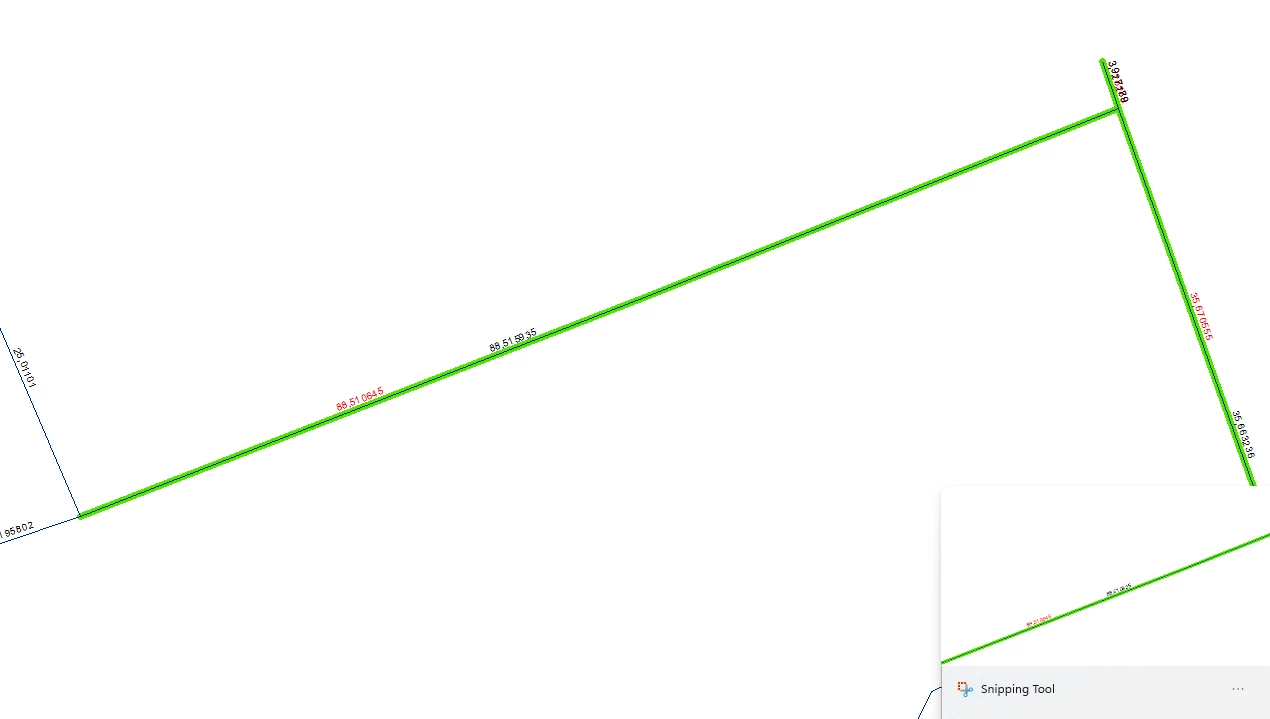
an example in the screenshot...how can i get the right result when i will tell to take the line which is nearly the same length (means with a condition)...the text are the length attributes…...the long lines in the middle didnt match because of minimal length differences….how can i make them match?
Thank you and greetz
Franco
Best answer by crutledge
Hi @franco69 For challenging matches like this I would:
First batch: Exact matches pass (Yay!) Second batch: Old unmatched lines » Create vertices (line to points) » take centre point of line » use points and buffer to select a match from new line dataset. Third batch: repeat and modify buffer as necessary Fourth batch: You will end up with new lines. How to manage these new lines will depend on business rules. Match/transfer attributes to closes line intersection? Add as new features? Dissolve and Rematch?
My attempts at this have been iterative. I have also seen folks create “unique ids” based on concatenating multiple fields. This might help to create a Frankenstein Unique ID field if attributes are similar between datasets. Could also try, as you mentioned, length but rounding the length to get a match.
Hi @franco69 For challenging matches like this I would:
First batch: Exact matches pass (Yay!) Second batch: Old unmatched lines » Create vertices (line to points) » take centre point of line » use points and buffer to select a match from new line dataset. Third batch: repeat and modify buffer as necessary Fourth batch: You will end up with new lines. How to manage these new lines will depend on business rules. Match/transfer attributes to closes line intersection? Add as new features? Dissolve and Rematch?
My attempts at this have been iterative. I have also seen folks create “unique ids” based on concatenating multiple fields. This might help to create a Frankenstein Unique ID field if attributes are similar between datasets. Could also try, as you mentioned, length but rounding the length to get a match.