



Every good conversation starts with a question — and we've been getting a lot of them lately. So we thought: why not make it a thing?
Welcome to The Question Corner, a recurring series on TGIF: Thank Goodness It’s FME, where we answer the questions you actually want to ask. No fluff, no filler — just honest, thoughtful answers to what's on your mind.
We'll be back regularly with more, so keep the questions coming!
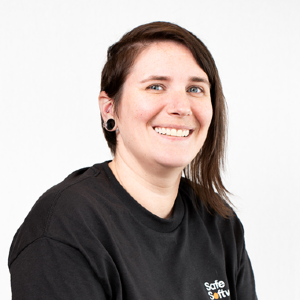
To kick things off, today’s edition features one of Safe Software’s FME Flow Product Managers, Nathan, here to answer some questions about FME Flow and the development process!
Q: Can you introduce yourself for our readers, and briefly explain your role here at Safe Software?
A: Hi! I'm Nathan, a Product Manager for the Workflow Execution and Enablement roadmap under the Enterprise Automation portfolio. My role is to help set product direction and priorities, partner with engineering and design to deliver improvements, and make sure we're solving the right problems for customers and partners. A big part of the job is listening: understanding what's working (and what isn't) in real customer deployments, then shaping a roadmap that improves reliability at scale and makes automation easier to manage.
Q: What is the long-term vision for FME Flow?
A: The long-term vision for FME Flow is to be the most trusted, flexible, and observable way to operationalize data integration and automation, especially for spatial and enterprise workflows. That means:
• Reliable orchestration of jobs and automations at scale, with strong scheduling, event-driven execution, and resilience
• Enterprise-grade governance: security, permissions, auditability, and change control
• Visibility and control: monitoring, alerting, performance insights, and faster troubleshooting
• A great admin and author experience, so it's easy to run Flow day-to-day and safe to scale it across teams
Q: How does FME Flow fit into the broader Safe Software product ecosystem (FME Form, FME Realize)?
A: Think of the FME ecosystem as a lifecycle:
• FME Form: where authors design and test integrations and transformations (the build stage)
• FME Flow: where those integrations get deployed and run reliably as scheduled or event-driven automations (the operate stage)
• FME Realize: where organizations can extend value from trusted data and make it actionable in context (the use and act stage)
The goal is a smooth path from building a workspace in Form, publishing and running it in Flow, then using the results to drive decisions and downstream systems.
Q: How are new features prioritized?
A: We prioritize using a mix of customer impact, urgency, and effort, informed by community demand, adoption and usage insights, strategic needs, and operational requirements. We also weigh platform work (security, reliability, scalability) alongside new features, because keeping the platform stable and protecting trust is foundational for everything else. In practice, prioritization is a conversation between product, engineering, customer-facing teams, and leadership. It's grounded in data where possible, and explicit about tradeoffs.
Q: How are features for deprecation or removal decided, and where can I find information on features being removed in future releases?
A: Deprecation decisions are guided by a few principles:
• Customer impact and usage: how many customers rely on the feature, and what the migration path looks like
• Security and maintainability: whether the feature creates risk or blocks platform improvements
• Better alternatives: whether there's a supported replacement that meets the same needs more safely or effectively
When features are deprecated, the goal is to provide clear notice, timelines, and migration guidance through release notes and product documentation. For a full list of deprecations and recommended replacements, see the FME Deprecations page and the FME Changelog.
Q: How do you collect and incorporate customer feedback into the product roadmap?
A: We rely on multiple feedback channels so we don't overfit to just one voice:
• Community ideas, votes, and discussions
• Technical Support trends and common pain points
• Partner feedback, including what's blocking real-world implementations
• Direct customer conversations, including admin and operator perspectives
• Aggregated usage signals, to understand scale, performance, and friction
We synthesize all of this, validate with further discovery, and prioritize based on impact, urgency, and effort, balancing quick wins with longer-term platform investments.
Q: What is your favourite part of the job?
A: I love that it's equal parts creative and practical. I get to take complex, real-world scenarios and shape them into product improvements that make users' work easier and more reliable. I also enjoy the range: there's always something new to learn, and I'm often thinking about how everything connects across the product. Add to that the cross-functional collaboration at Safe, working with customer-facing teams, UX, engineering, and marketing, and it's a really energizing and rewarding role.
Q: And finally, what are your top three (3) wishlist features for FME Flow?
A: If I had a magic wand, I'd pick:
• Best-in-class observability: a unified place to see automation health, run history, performance bottlenecks, and actionable diagnostics, with great alerting
• Governance at scale: richer role-based controls, safer promotion workflows across dev, test, and production environments, and clearer audit trails for compliance
• A smoother authoring-to-operations loop: easier packaging, dependency insight, and change impact visibility so teams can move faster without breaking things
Thanks, Nathan!
That’s a wrap on today’s edition of The Question Corner. We hoped you enjoyed getting to know a bit more about Nathan, his role here at Safe Software, and the FME Flow development process!
Got something you've been wondering about? Drop it here!